Thursday, October 28, 2010

NACCM 2010: An Interview with the Conference Chair
On the last day of NACCM 2010, we caught up with Curtis Bingham, President and Founder, CHIEF CUSTOMER OFFICER COUNCIL, the Chair for the 2010 Conference.
NACCM 2010: How Leaders Must Empower Employees: CareerBuilder.com Focuses on People, Process and Culture
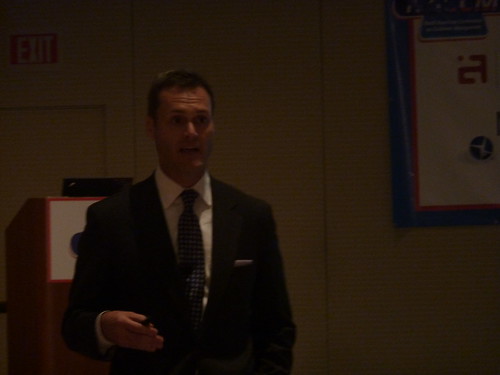 Presented by: Mike Hargis, CAREERBUILDER
-Millennials are 2-3x more accepting to new technologies
-Millennials prefer structure for their day
-Millennials would rather work as a group than as individuals
How do you retain Millennials? Trust, balance and structure
Career builder only keeps people in their call center for 24-36 months, otherwise they get burnt out. Create a fun environment with degrees in psychology, philosophy, then go on and invest in their training. They do at least 3 events a year to build leadership, such as “Extreme Events”. They reward by creating videos. Employees share these videos, and it makes it easy to attract the right type of people to your company.
They’ve created an App to refer candidates on Facebook. By sharing content, they were able to successfully communicate to more people
Wednesday, October 27, 2010
NACCM 2010: The Hartford’s Journey Toward Building an Award Winning Culture
Presented by Sue Brinker, AVP Property & Casualty Learning, Hartford Insurance
NACCM, 2010
Hartford’s Advance 50 team is comprised of 5,000 highly credentialed reps with advanced degrees in an aging-related field. The obvious gap is that the customers being served average an age of 65, while the reps are 24 years old. Therefore hiring for attitude is critical, with training, individual coaching, enabling systems, metrics, and rewards to do the rest.
Their training is very deliberate and lasts 11 weeks, 6 weeks of which is live work with customers. New hires are on the phone side-by-side with their mentor as soon as day 8, which enables the employee to learn, apply the knowledge, and be coached.
Empathy and patience are critical for these 24-year olds, since many of their AARP customers are recently widowed, have suffered a stroke, or have hearing loss. They task the rep with working on their own improvement plans where opportunities are discovered. And they maintain the “best call” library contest that serves as both a recognition vehicle and also provide examples as an excellent resource.
NACCM, 2010
Hartford’s Advance 50 team is comprised of 5,000 highly credentialed reps with advanced degrees in an aging-related field. The obvious gap is that the customers being served average an age of 65, while the reps are 24 years old. Therefore hiring for attitude is critical, with training, individual coaching, enabling systems, metrics, and rewards to do the rest.
Their training is very deliberate and lasts 11 weeks, 6 weeks of which is live work with customers. New hires are on the phone side-by-side with their mentor as soon as day 8, which enables the employee to learn, apply the knowledge, and be coached.
Empathy and patience are critical for these 24-year olds, since many of their AARP customers are recently widowed, have suffered a stroke, or have hearing loss. They task the rep with working on their own improvement plans where opportunities are discovered. And they maintain the “best call” library contest that serves as both a recognition vehicle and also provide examples as an excellent resource.
NACCM 2010: Ace Care Increases Efficiency without Losing “Tribal Knowledge” or Personal Touch
Presented by Kalus Buellesbach, NACCM 2010
Helping you is the most important thing we have to do today.

As the world’s largest retail cooperative, Ace has 4600 independent stores served by 4,200 direct employees. Their challenge has always been to create a support environment that emphasizes quality while scaling the business.
To that end they implemented the Ace Care Center project, which focused on improving service by utilizing the resources from 85 people in 7 different helpdesks that served retailers, consumers, vendors, and employees. Starting with unifying contact processes and rationalizing service hours, they were then able to improve service levels and drive quality. Since they had little budget, they were able to implement a call recording system using $100 devices from Radio Shack and provide robust agent scorecards using Excel-based tools, using the budget for bonus compensation that rewards agent performance.
Helping you is the most important thing we have to do today.

As the world’s largest retail cooperative, Ace has 4600 independent stores served by 4,200 direct employees. Their challenge has always been to create a support environment that emphasizes quality while scaling the business.
To that end they implemented the Ace Care Center project, which focused on improving service by utilizing the resources from 85 people in 7 different helpdesks that served retailers, consumers, vendors, and employees. Starting with unifying contact processes and rationalizing service hours, they were then able to improve service levels and drive quality. Since they had little budget, they were able to implement a call recording system using $100 devices from Radio Shack and provide robust agent scorecards using Excel-based tools, using the budget for bonus compensation that rewards agent performance.
NACCM 2010: Service Sabbatical: Blue Cross Blue Shield’s Employee Development Opportunity
Patricia Dilane, Director Member Service Delivery, Blue Cross Blue Shield Massachusetts
Service Sabbatical is an innovative program from BCBS-Mass that improves quality, reduces attrition, and generates goodwill in the community, driving hard ROI.
The initial objective they had in mind was to provide the ability for associates to grow professionally, not just job training, and also be able to provide stronger ties to the communities they serve. The thinking was that this approach could improve quality and attrition metrics, paying for itself.
The week-long curriculum focuses on
• Big-picture call-center operations
• Business challenges that the center faces
• Team building through development of solutions to those problems, including interviewing executives to gain context and knowledge while gaining more exposure
• and a community event that “gives back”
They run the program regularly, accepting 10-12 associates into the program each quarter from a pool of approximately 50 applicants. Senior management believes in this and attends the sessions as well, both participating and encouraging. They even now have a wait-list from senior executives that all want to participate.

Feedback from the associates has been incredible – survey responses are tremendously positive. But beyond that, BCBS quality metrics have increased for all participants, many have been promoted and attrition has decreased. The program has even expanded into Claims and Provider Services areas, further facilitating cross-functional collaboration and teamwork.
Service Sabbatical is an innovative program from BCBS-Mass that improves quality, reduces attrition, and generates goodwill in the community, driving hard ROI.
The initial objective they had in mind was to provide the ability for associates to grow professionally, not just job training, and also be able to provide stronger ties to the communities they serve. The thinking was that this approach could improve quality and attrition metrics, paying for itself.
The week-long curriculum focuses on
• Big-picture call-center operations
• Business challenges that the center faces
• Team building through development of solutions to those problems, including interviewing executives to gain context and knowledge while gaining more exposure
• and a community event that “gives back”
They run the program regularly, accepting 10-12 associates into the program each quarter from a pool of approximately 50 applicants. Senior management believes in this and attends the sessions as well, both participating and encouraging. They even now have a wait-list from senior executives that all want to participate.

Feedback from the associates has been incredible – survey responses are tremendously positive. But beyond that, BCBS quality metrics have increased for all participants, many have been promoted and attrition has decreased. The program has even expanded into Claims and Provider Services areas, further facilitating cross-functional collaboration and teamwork.
NACCM 2010: View from the Top
Jay Steinfeld, CEO, Blinds.Com
It’s hard to do one thing 100% better than everyone, but you can do 100 things 1% better. It all adds up.

Blinds.Com is the largest provider of window treatments on-line, and has revenue per employee equal to Amazon and Facebook. Their mission is to create an experience that makes buying complex and customizable products surprisingly easy and exciting.
To accomplish this Jay runs the business by the numbers, with a critical number KPI being Gross Margin per visit since this reflects conversion rates and sales growth, and provides a leads into where to dig deeper. But repeat business and referral rates, and Net Promoter Scores are also extremely important, and Jay uses those to make sure they can get customer needs addressed with the right priority.
Jay spent many years driving to customers’ homes before going on-line , and believes in the power of customer feedback at the individual level. In that regard, Blinds.Com establishes Net Promoter Scores around the organization, even down to the individual agent level, calculating NPS for each agent. Driving some internal competition, Blinds.Com believes in the effectiveness of transparency and publishes all scores out to everyone. This rather unique practice drives other great behaviors, including better information sharing between departments, better collaboration between teams.
Those interactions with customers have shaped their core values: improve continually, and experiment without fear. Jay hires people that are aligned with these beliefs, asking prospective employees during the interview how they have strived to improve themselves within the last 6 months, and what they did to change for the better. As a result Blinds.Com has a team of people that works together and strives to do better, especially when it comes to improving the customer experience.
Jay attributes their incredible growth over the years to those core values. In fact, the business didn’t really take off until those values were formally established and became part of the business’ DNA.
Some examples of how this manifests itself in some simple practices:
• All employees have the opportunity to present at regular all-hands meetings
• Teams maintain open whiteboards showing the things they are working on with facilitated areas for new ideas.
Jay writes a regular column on BNet called the No-nonsense Boss. Sounds more than worth checking out.
[This blog provided by Steve Bernstein of Waypoint Group, and cross-posted at the Customer Insight = Revenue blog]
It’s hard to do one thing 100% better than everyone, but you can do 100 things 1% better. It all adds up.

Blinds.Com is the largest provider of window treatments on-line, and has revenue per employee equal to Amazon and Facebook. Their mission is to create an experience that makes buying complex and customizable products surprisingly easy and exciting.
To accomplish this Jay runs the business by the numbers, with a critical number KPI being Gross Margin per visit since this reflects conversion rates and sales growth, and provides a leads into where to dig deeper. But repeat business and referral rates, and Net Promoter Scores are also extremely important, and Jay uses those to make sure they can get customer needs addressed with the right priority.
Jay spent many years driving to customers’ homes before going on-line , and believes in the power of customer feedback at the individual level. In that regard, Blinds.Com establishes Net Promoter Scores around the organization, even down to the individual agent level, calculating NPS for each agent. Driving some internal competition, Blinds.Com believes in the effectiveness of transparency and publishes all scores out to everyone. This rather unique practice drives other great behaviors, including better information sharing between departments, better collaboration between teams.
Those interactions with customers have shaped their core values: improve continually, and experiment without fear. Jay hires people that are aligned with these beliefs, asking prospective employees during the interview how they have strived to improve themselves within the last 6 months, and what they did to change for the better. As a result Blinds.Com has a team of people that works together and strives to do better, especially when it comes to improving the customer experience.
Jay attributes their incredible growth over the years to those core values. In fact, the business didn’t really take off until those values were formally established and became part of the business’ DNA.
Some examples of how this manifests itself in some simple practices:
• All employees have the opportunity to present at regular all-hands meetings
• Teams maintain open whiteboards showing the things they are working on with facilitated areas for new ideas.
Jay writes a regular column on BNet called the No-nonsense Boss. Sounds more than worth checking out.
[This blog provided by Steve Bernstein of Waypoint Group, and cross-posted at the Customer Insight = Revenue blog]
NACCM 2010: Learning Leadership Disney Style for Strong Business Results
 Presenter: William Greenwald, HUMANA
Leadership Details from Disney:
-Attention to detail – Humana has no meetings between 8:00-9:00 and 4:00-5:00 so they can meet with their employees and say good morning/good evening
-As leaders, you must listen to your employees. They can provide insights as little things you can do to improve your employees interactions with customers.
-When someone is asking a question, figure out what they’re really asking.
Expect resistance – Great leaders must listen. Managers must listen. Most people have problems with change. Have you ever been taught how to deal with change? People have resistance because they don’t know how.
Make people your brand. Is it common practice in your organization? People aren’t often in the most conventional places. Leaders can pick out talent in individuals even though they may not have had previous experience. Hire for your organization with emotional intelligence.
-How do you teach leaders to teach others?
-“Burn the free fuel” – do the free things – recognize your employees, show up to the employee birthday parties, recognize your employees and their spouses
-Train for leaders, not just skill
NACCM 2010: Leadership Means Enabling Success for All Associates: How ADT's Employee Engagement Impacts the Bottom Line
 Presented by: Georgia Eddleman Little, ADT SECURITY SERVICES
The Customer Monitoring Center – take calls for customers at times of emergency, answering calls for over 90,000 alarms a day. They also serve as the security for all WalMart products.
Employee engagement at ADT: IT’s critical to their success.
Four ways to link engagement to high performance with employees:
1) Build a line of sight
2) Increase involvement
3) Share of accurate decision making decisions
4) Reward and recognition
When evaluating individuals, the information goes to the direct manager’s boss. Every quarter, there is a meeting with the director a level above their manager. In addition, each quarter, one team from each center collects the information, collaborate across call centers, and then develop a report and share it on the company’s portal. It’s an easy way to get employee engagement and views from the front line.
NACCM 2010: Customer-Centric Leadership: Sun International Hotels Gears Up for the World Cup
 Presented by: Ica van Eeden, SUN INTERNATIONAL (PTY) LTD HOTEL GROUP
What does customer management mean? Identify and undsteradn what they really want and look at what your business really is. They need to have a good business strategy with balance.
Manage five things for their customers:
1) Perceptions
2) Interactions
3) Experiences
4) Relationships
They had to unite their brands under across many different cultures. They chose to use CHarleze Theron as a brand ambassador, as she represented many of the ideals of South Africa. They then created a strategy to communicate their new vision across their properties world wide. How did they implement this? They started in one hotel then moved to many others. Their projects just continued into the World Cup.
How do you deliver an experience? Map out all customer touch points. The Middle Manager became the coach. They coached the employees as to their new goals and initiatives. They created videos that showcased the bad experience then the good experience and discussed the attitudes between the two.
She challenged all Middle Managers, and explained that they were the customer service and they had to lead by action.
NACCM 2010: Drive Business Performance: How Leaders Enable a Culture of Intelligent Execution
 Joey Fitts, Author, DRIVE BUSINESS PERFORMANCE: ENABLING A CULTURE OF INTELLIGENT EXECUTION
How do you differentiate from the competitor? Focus on great customer experience.
The core function of customer service is to deal with customers. Customer centricity is not a single department or function, but something that needs to persist across the organization. Everyone has to be able to understand customers: both their needs and their wants.
We have to understand customers, and how their perceive the issues. We should not only understand our customers, but understand who they are talking to and what they know. What does evidence play in making decisions?
Customer loyalty. They’re loyal to you, but how loyal are you to them? Is it easy to engage with your customers? Within Hilton, 5% Loyalty increase resulted in a 1.1% revenue increase.
Innovation is a challenge. Know what customers need, even if they don’t know what they need. Previously, Lego has been innovating, but not in a way that makes sense to their customer. They must understand their consumers, because the majority of their sales each year are on products that didn’t exist the year before. They started to focus on their core customers, and they see results in their sales.
NACCM 2010: "Breakfast of Champions" Outdoor Roundtables
 Roundtable: Gina Debogovich, BEST BUY
Best Buy’s social strategy has really taken flight over the past three years. Here are a few of the key points from her roundtable:
- -Her team creates videos on a biweekly basis. It is all done in house by her employees. They produce videos that often see the highest call volumes and questions to their call center, which often reduces their incoming calls.
- -Through all of their platforms, they continue to engage with their customers and answer customer service questions first.
- -With all of their social media platforms, they have to cater the voice that is used on the platform. Messaging and conversations aren’t’ the same from Facebook to Twitter to their online message boards.
Best Buy’s Social Media policy can be found at bestbuysocialmediapolicy.com.
Tuesday, October 26, 2010
NACCM 2010: What was one thing you learned today?
After an informative day at NACCM, a few attendees shared one thing they learned about today. Watch the video:
What did you learn at NACCM on Day One? Would you like to share your findings on Day Two? Find New Media and share!
What did you learn at NACCM on Day One? Would you like to share your findings on Day Two? Find New Media and share!
NACCM 2010: Growing a Branded Community to Increase Engagement and Advocacy

Pesented by Rebecca (Becky) Carroll, Community Program Manager, Verizon, NACCM 2010
Moving from as tech support oriented community with forums into a more engaging business community required Verizon to realize that social media isn’t a campaign; it is a strategy to build relationships. Viral activities are fleeting – customer evangelism lasts.
Communities allow companies to listen in to conversations and benefit from the insight. And customers have the opportunity to get answers to broader questions beyond Verizon offerings. They have 12 individual customers that lead their communities (not employees), doing this work out of sheer love and passion, and selected from their contribution to the community every 6 months.
As part of the effort, Verizon also monitors and engages via Twitter, via their “Idea Exchange” site, and provides educational and lifestyle content through “Room to Learn.” These activities provide other channels for communication, since customers have different needs and not all use the forums.
And if you think this is all too expensive to do, note that Verizon has only a team of 3 plus their community software vendor. Lean and mean!
The Verizon community is open to everyone, not just customers. As a vehicle to grow their business, the communities also enable Verizon can also get closer to the customer, gain new insights, and drive improvements in customer retention. And for customers, they now are able to self-serve, learn, and have a place to be heard.
Becky recommends starting within your own community: Go into your company’s forums and see what people are saying, passing along the insight in customer-speak. You can then go to external social sites like Twitter and Facebook, using that “customer-speak” from your own forums to find the things that are the best opportunities for engaging customers on your own site.
[Posted by Steve Bernstein of Waypoint Group, and cross-posted at Customer Insight = Revenue blog]
Moving from as tech support oriented community with forums into a more engaging business community required Verizon to realize that social media isn’t a campaign; it is a strategy to build relationships. Viral activities are fleeting – customer evangelism lasts.
Communities allow companies to listen in to conversations and benefit from the insight. And customers have the opportunity to get answers to broader questions beyond Verizon offerings. They have 12 individual customers that lead their communities (not employees), doing this work out of sheer love and passion, and selected from their contribution to the community every 6 months.
As part of the effort, Verizon also monitors and engages via Twitter, via their “Idea Exchange” site, and provides educational and lifestyle content through “Room to Learn.” These activities provide other channels for communication, since customers have different needs and not all use the forums.
And if you think this is all too expensive to do, note that Verizon has only a team of 3 plus their community software vendor. Lean and mean!
The Verizon community is open to everyone, not just customers. As a vehicle to grow their business, the communities also enable Verizon can also get closer to the customer, gain new insights, and drive improvements in customer retention. And for customers, they now are able to self-serve, learn, and have a place to be heard.
Becky recommends starting within your own community: Go into your company’s forums and see what people are saying, passing along the insight in customer-speak. You can then go to external social sites like Twitter and Facebook, using that “customer-speak” from your own forums to find the things that are the best opportunities for engaging customers on your own site.
[Posted by Steve Bernstein of Waypoint Group, and cross-posted at Customer Insight = Revenue blog]
NACCM 2010: Improving Worldwide Customer-Centric Culture & Accountability

Presented by Ines Vargas, LATAM Customer & Partner Experience Lead, Microsoft Corporation, NACCM 2010
95% of Microsoft’s business comes through more than 640,000 partners. And with 88,000 employees worldwide, Microsoft has created a very challenging environment to manage.
They maintain a simple execution model based on 3 pillars:
1. Listening Systems: Windows 7 is based on millions of customer opinions and exemplifies what can be done when they listen to customers. Microsoft conducts a bi-annual customer relationship survey, transactional surveys, website surveys, submitted feedback, and even in-product submissions. All are followed-up where issues are uncovered, both individually and in the aggregate for ongoing improvement. As an example, the in-product window that appears when a Windows system issue occurs gathers critical data that is used in prioritizing fixes, establishing service packs, and communications.
95% of Microsoft’s business comes through more than 640,000 partners. And with 88,000 employees worldwide, Microsoft has created a very challenging environment to manage.
They maintain a simple execution model based on 3 pillars:
1. Listening Systems: Windows 7 is based on millions of customer opinions and exemplifies what can be done when they listen to customers. Microsoft conducts a bi-annual customer relationship survey, transactional surveys, website surveys, submitted feedback, and even in-product submissions. All are followed-up where issues are uncovered, both individually and in the aggregate for ongoing improvement. As an example, the in-product window that appears when a Windows system issue occurs gathers critical data that is used in prioritizing fixes, establishing service packs, and communications.
2. Business Planning & Performance Management: Scorecards are used throughout all levels of the organization. Everyone has commitments around customer and partner experience, measured both directly and indirectly. For example, since they know that Windows 7 has the highest and excellent satisfaction levels compared to previous versions, they track the conversion rate of customers migrating to this product.
3. Culture & Accountability: In addition to corporate values, Microsoft has a Senior Executive responsible for Customer Experience enterprise-wide, and ties individual goals to compensation. Accountability is measured and monitored through scorecards, as well as well as with peer recognition and spot awards.
Microsoft maintains a website for all to see their efforts, at http://www.microsoft.com/about/cpe
[This posted provided by Steve Bernstein of Waypoint Group, and cross-posted on Customer Insight = Revenue blog.]
[This posted provided by Steve Bernstein of Waypoint Group, and cross-posted on Customer Insight = Revenue blog.]
NACCM 2010: Westfield Creates a Culture of WOW through Employee Engagement

Westfield Creates a Culture of WOW through Employee Engagement
Presented by Andre Harris, Westfield’s VP Brand and Employee Communications, NACCM 2010
Connect with employees to create the customer experience.
Westfield isn’t just a landlord or owner of shopping malls: they manage all aspects of the shopping experience for the properties they own, and want to make sure they deliver a differentiated experience. Westfield’s “WOW” used to be a program, and Andre has now been able to transform it into the overall culture, which includes their partners and vendors:
Way beyond the expected.
Own it personally.
Win over their hearts.
Andre shared their -steps to create a Culture of WOW:
1. HEAR the voice-of-the customer: Know what customers want, expect, and value. They respond to 100% of complaints, since satisfied customers tell 3 friends but angry customers tell 3,000, and a complaint is an opportunity to WOW.
Presented by Andre Harris, Westfield’s VP Brand and Employee Communications, NACCM 2010
Connect with employees to create the customer experience.
Westfield isn’t just a landlord or owner of shopping malls: they manage all aspects of the shopping experience for the properties they own, and want to make sure they deliver a differentiated experience. Westfield’s “WOW” used to be a program, and Andre has now been able to transform it into the overall culture, which includes their partners and vendors:
Way beyond the expected.
Own it personally.
Win over their hearts.
Andre shared their -steps to create a Culture of WOW:
1. HEAR the voice-of-the customer: Know what customers want, expect, and value. They respond to 100% of complaints, since satisfied customers tell 3 friends but angry customers tell 3,000, and a complaint is an opportunity to WOW.
2. HIRE “wow” employees: The culture is part of everyone’s job descriptions.
A great example: A hiring manager wanted to give candidates gift bags. The thinking is that even though they aren’t hiring all these people, they are still a Westfield customer and should be treated well.
3. TRAIN: They have a clear understanding of their purpose, so everyone, including outsourced employees and executives, go through WOW Training. The training details 7 critical areas, including “Make their Day” and “Represent.” Empowerment, recognition, and reward are critical success factors. Telling success stories not only makes it more real and memorable, but also provides real solutions and answers to the questions that employees bring from their daily interactions with customers.
A great example: A hiring manager wanted to give candidates gift bags. The thinking is that even though they aren’t hiring all these people, they are still a Westfield customer and should be treated well.
3. TRAIN: They have a clear understanding of their purpose, so everyone, including outsourced employees and executives, go through WOW Training. The training details 7 critical areas, including “Make their Day” and “Represent.” Empowerment, recognition, and reward are critical success factors. Telling success stories not only makes it more real and memorable, but also provides real solutions and answers to the questions that employees bring from their daily interactions with customers.
4. MEASURE: Customer, Retailer, and Employee satisfaction surveys are all part of the process. Employee turnover is a key measure as an indicator of customer experience, and of course also adds to the bottom-line.
[Posted by Steve Bernstein of Waypoint Group and cross-posted on Customer Insight = Revenue blog]
NACCM 2010: Connecting With Customers and Measuring Results

Presented by Tom Zimmerman, GE Healthcare, NACCM 2010
"Customer Experience” starts with Marketing, not after Sales.
For GE Healthcare, excellent service means that customers are more likely to buy another $1M piece of equipment. Service and Customer Experience has to start with the Marketing and Sales process.
Marketers often want to get information from prospects, but you have to give something back first before the customer is ready to give more. Classic lead-generation criteria include Budget, Authority, Need, and Timing, but the customer may just want to speak with someone to get more information. So starting with a definition of “sales ready” leads then brought them to defining what needed to be developed.
Starting with content first, every page has a “Contact Us” area that allows the customer to engage if they are ready. Make sure that the organization is ready and able to follow-up when the customer request live contact.
Metrics are where it’s at: GE Healthcare can see the amount of spend on each campaign, and how it’s generated incremental revenue through the funnel. Since each touch has a campaign ID, they can now track the movement of the prospect through the marketing funnel, ultimately up to a sales-ready lead and establishing the value of the opportunity.
Every part of the organization brings a different perspective to the customer experience. It usually takes all perspectives to get to the optimal experience, so engage those different points of view around the organization to meet the company goals.
[This post provided by Steve Bernstein of Waypoint Group, and cross-posted on the Customer Insight = Revenue blog]
"Customer Experience” starts with Marketing, not after Sales.
For GE Healthcare, excellent service means that customers are more likely to buy another $1M piece of equipment. Service and Customer Experience has to start with the Marketing and Sales process.
Marketers often want to get information from prospects, but you have to give something back first before the customer is ready to give more. Classic lead-generation criteria include Budget, Authority, Need, and Timing, but the customer may just want to speak with someone to get more information. So starting with a definition of “sales ready” leads then brought them to defining what needed to be developed.
Starting with content first, every page has a “Contact Us” area that allows the customer to engage if they are ready. Make sure that the organization is ready and able to follow-up when the customer request live contact.
Metrics are where it’s at: GE Healthcare can see the amount of spend on each campaign, and how it’s generated incremental revenue through the funnel. Since each touch has a campaign ID, they can now track the movement of the prospect through the marketing funnel, ultimately up to a sales-ready lead and establishing the value of the opportunity.
Every part of the organization brings a different perspective to the customer experience. It usually takes all perspectives to get to the optimal experience, so engage those different points of view around the organization to meet the company goals.
[This post provided by Steve Bernstein of Waypoint Group, and cross-posted on the Customer Insight = Revenue blog]
NACCM 2010: It’s Not About Smiling More: Creating a Measureable Customer Experience Culture at Thomson Reuters

Presented by Barbara Graovac, VP and GM of Thomson Reuters Employer Market, NACCM 2010
Use right-brain techniques to strengthen relationships with customers.
It’s not enough to be better than your competitors: Expectations are set by experiences all around us. So in 2007 Barbara went to the board and recommended service innovation. It took 3 tries to get it to stick: the language that eventually worked was around increasing profitability and revenue.
Barbara’s division was hearing that customers wanted more from them: Customers wanted broader solutions that solved business needs, delivered easily and empathetically. The issue wasn’t price. Leading indicators of client behaviors were measured: How fast does the client return phone calls? Do they invite you to critical meetings?
Presenting what would happen if they did mothering compared to what would happen if they took action, the division decided to take action. The first step was to define the gaps against what they wanted the customer experience to be. Next, a 100-day pilot was planned that would work with a limited number of customers requiring specific cross-functional issues.
A limited number of customers were selected to participate in this early program that spanned different aspects of the business. They consistently found that customers wanted “Right brain” service – “gift wrapping” products and services in friendly interactions that are hassle-free. The gap was that as a company they were more geared to “Left brain” – delivering products and services and measuring specific results. It’s the “soft side” that customers remember and value.
Internal education and awareness of “left brain” ensued. The strategy was one of “Yes if…”, and NOT “No but…” They trained staff around responding to customers with, “Yes. if [conditions could be met].” Clients are people, not organizations, and the emotional engagement proved to be very valuable.
At a structural level, the division innovated around specific customer pain points, including a new customer welcome packet that included photos, key bios, and other relevant materials. As a result the client now feels more connected with the account team.
In surveying the employees that went through the pilot in addition to their managers (which wasn’t part of the pilot), they found that managers were consistently providing higher scores and thinking they were performing better than the employees felt. Addressing these gaps helped fill in some of the mentoring opportunities for managers.
All this work resulted in both “soft” results, such as
- An increase in general excitement levels
- Recognition from customers that w=as passed around the company
And also “hard” metrics that increased across the board:
- Client engagement
- Employee engagement
- Customer renewal rates
[This blog posted by Steve Bernstein of Waypoint Group, and cross-posted on the Customer Insight = Revenue blog]
Use right-brain techniques to strengthen relationships with customers.
It’s not enough to be better than your competitors: Expectations are set by experiences all around us. So in 2007 Barbara went to the board and recommended service innovation. It took 3 tries to get it to stick: the language that eventually worked was around increasing profitability and revenue.
Barbara’s division was hearing that customers wanted more from them: Customers wanted broader solutions that solved business needs, delivered easily and empathetically. The issue wasn’t price. Leading indicators of client behaviors were measured: How fast does the client return phone calls? Do they invite you to critical meetings?
Presenting what would happen if they did mothering compared to what would happen if they took action, the division decided to take action. The first step was to define the gaps against what they wanted the customer experience to be. Next, a 100-day pilot was planned that would work with a limited number of customers requiring specific cross-functional issues.
A limited number of customers were selected to participate in this early program that spanned different aspects of the business. They consistently found that customers wanted “Right brain” service – “gift wrapping” products and services in friendly interactions that are hassle-free. The gap was that as a company they were more geared to “Left brain” – delivering products and services and measuring specific results. It’s the “soft side” that customers remember and value.
Internal education and awareness of “left brain” ensued. The strategy was one of “Yes if…”, and NOT “No but…” They trained staff around responding to customers with, “Yes. if [conditions could be met].” Clients are people, not organizations, and the emotional engagement proved to be very valuable.
At a structural level, the division innovated around specific customer pain points, including a new customer welcome packet that included photos, key bios, and other relevant materials. As a result the client now feels more connected with the account team.
In surveying the employees that went through the pilot in addition to their managers (which wasn’t part of the pilot), they found that managers were consistently providing higher scores and thinking they were performing better than the employees felt. Addressing these gaps helped fill in some of the mentoring opportunities for managers.
All this work resulted in both “soft” results, such as
- An increase in general excitement levels
- Recognition from customers that w=as passed around the company
And also “hard” metrics that increased across the board:
- Client engagement
- Employee engagement
- Customer renewal rates
[This blog posted by Steve Bernstein of Waypoint Group, and cross-posted on the Customer Insight = Revenue blog]
NACCM 2010: Keeping it Real with Customers: Nationwide on your Side

Keeping it Real with Customers: Nationwide on your Side
Presented by Jasmine Green, Chief Customer Advocate, Office of Customer Advocacy, at NACCM 2010
Empower the front-line with empathy.
Initially born out of the CEO being tired of getting customer complaints, Nationwide started their journey by creating a single place to resolve customer issues. They were getting so much data, but being excellent at handling individual complaints wasn’t enough – Nationwide needed to get to root cause and something with this wealth of information. Some of the specific initiatives include:
o A “Top 5” report that is reviewed regularly at the executive level, providing the ability to drill into the major improvement opportunities.
o Nationwide now looks both at the Kudos and the Complaints, and also tie to employee feedback to be able to recognize employee performance and prioritize the right opportunities.
o They pass exactly what the customer says on to others in the organization: No filtering. Nationwide has found that the verbatim is critical – don’t water it down, making it more real.
o Jasmine has rolled out a comprehensive training program across all 32,000 associates for service recovery, and have shifted culture to one of respect internally that then is passed on to the customer. Empathy is emphasized – treat customers like your friend and make them feel special.
They recognize that their front-line associates are critical to providing an excellent customer experience, and therefore Jasmine view her responsibility as being on the job 24×7, not 9:00a to 5:00p. Measuring employee engagement is a big part of making it work, and correspondingly they also increased accountability of the front-line and further empowerment.
Key to their success has been the ability to tie improvements to the bottom line and show the business benefit (ROI) for various initiatives. Focusing on retention has made them able to establish the ROI for everything they do.
Presented by Jasmine Green, Chief Customer Advocate, Office of Customer Advocacy, at NACCM 2010
Empower the front-line with empathy.
Initially born out of the CEO being tired of getting customer complaints, Nationwide started their journey by creating a single place to resolve customer issues. They were getting so much data, but being excellent at handling individual complaints wasn’t enough – Nationwide needed to get to root cause and something with this wealth of information. Some of the specific initiatives include:
o A “Top 5” report that is reviewed regularly at the executive level, providing the ability to drill into the major improvement opportunities.
o Nationwide now looks both at the Kudos and the Complaints, and also tie to employee feedback to be able to recognize employee performance and prioritize the right opportunities.
o They pass exactly what the customer says on to others in the organization: No filtering. Nationwide has found that the verbatim is critical – don’t water it down, making it more real.
o Jasmine has rolled out a comprehensive training program across all 32,000 associates for service recovery, and have shifted culture to one of respect internally that then is passed on to the customer. Empathy is emphasized – treat customers like your friend and make them feel special.
They recognize that their front-line associates are critical to providing an excellent customer experience, and therefore Jasmine view her responsibility as being on the job 24×7, not 9:00a to 5:00p. Measuring employee engagement is a big part of making it work, and correspondingly they also increased accountability of the front-line and further empowerment.
Key to their success has been the ability to tie improvements to the bottom line and show the business benefit (ROI) for various initiatives. Focusing on retention has made them able to establish the ROI for everything they do.
[This blog posted by Steve Bernstein of Waypoint Group, and cross-posted on the Customer Insight = Revenue blog]
NACCM 2010: The Business Behind the Magic of Disney's Chain of Excellence: Leadership, People Management, Quality Service, and Loyalty
 Presented by: Mike Reardon, DISNEY INSTITUTE
What is the business model behind Disney? They made sure they could verify it. They have a chain of excellence: Leadership Excellence, Cast Excellence, Guest Satisfaction, Financial Results/Repeat Business. Key metrics: metrics to return and intent to tell others. If you don’t start out with great leaders, you’ll never achieve the great results your companies capable of.
Two keys to creativity at Disney:
-Everyone is creative
-Keep identities separate from idea
Keep creativity open. Why? You never know what’s going to come of them. What do cruise lines and Disney have to do with each other? Nothing. But give families a reason to travel. They are doubling the size of their fleet in the current economy. They expanded their “box” and made their realm bigger.
Pirates of the Caribbean started as a ride. They then turned it into a movie, premiered it in a park. Everyone went to the ride looking for Jack Sparrow. Since then, Disney has updated and added Jack to the ride and expanded it to include more from the Caribbean.
The leader and relationships at Disney: responsibility, commitment, and inspiration. Every leader is telling a story about what he/she values. We judge ourselves by our intentions and others by their actions.
Walt sold his vision from moving the movies to an interactive theme park. He told his story, and set up his organization for success. True leaders are collaborators. Leaders look for reasons to change.
NACCM 2010: The Power of Customer Advocacy in Business-to-Business Markets – Market Probe’s Research Approach to Leveraging the Power of Word-of-Mouth
 Presented by: Michael Lowenstein, MARKET PROBE
Customer retention is important, but the name of the game is how you use touchpoints and experiences to cross sell and upsell.
Touch points and methods that individuals have a standing contact. That will create the positive relationships and outcomes you’re looking for. We currently focus on what monetizes. Advocacy focuses on this. It is critical to this is on/offline word of mouth.
Advocates will do your marketing for you. Leverage the people who already love your brand. Word of mouth is a factor that can’t be looked beyond. Loyalty is a passive state. What do people trust? Word of mouth is a source for making business decisions. Individuals don’t trust organizations and what they have to say. People believe they can trust other people. It doesn’t matter where word of mouth comes from, but what companies have to pay attention to that information says.
NACCM 2010: The Organizational Impact of Real-Time Customer Feedback
 Presented by: Matthew Bowman, ALLEGIANCE
Real-time customer feedback: Contrasting real time feed back against laitency issues that are common with customer feedback reports. The internet and social media are providing customers with new expectations. Social Media has conditioned most US consumers to expect to be able to give feedback. SmartPhones allow customers to comment on the spot, or on the way to the car after they’ve had a bad customer experience.
The biggest growing demographic on social media is women ages 35-55. They’re also the largest purchasing demographic. The pure amount of data now available is providing customer feedback is causing companies to have to take notice. American Express finding – 61% of Americans will pay a premium of 9% for better customer experience.
Text analytics tools can help pull in feedback and analyze it when it comes to complaints on the internet. These can allow you to quantify all of the feedback, not just “positive” feedback and “negative” feedback.
NACCM 2010: Straight Talk: How Electronic Arts' Leaders Empower Employees
 Boyd Beasley, ELECTRONIC ARTS
Beasley starts by asking: Do you know whether or not the service in your business is good? Will your agents break a policy when they need to to keep a customer? The gaming industry is shifting to a free-to-play online, which is costing quite a bit of time.
2 Wins in Customer Service at EA this year:
-COO agreed to reach target service level
-They received a budget that can support the staff for the standards level
If you are not talking to your call center employees on a regular basis, then you don’t know what your customers are asking for. Beasley wonders whether we’re looking at employees measurements for things that don’t matter such as call handle time. How should that be managed against first time resolutions? Talk to your employees about what’s going on in the company? They can share what is working and not working for your company.
NACCM 2010: AutoTrader.com Drives Sales, Retains Business, and Shapes Key Company Objectives with Their Client Loyalty Program
 Presenter: Joe Richards, AUTOTRADER.COM
Autotrader created a customer satisfaction program for their customers in 2005. Through this, over 40,000 customers are surveyed a year. The 16% completion rate. The goal is for the findings from this program to be intergraded into the business.
They’ve created an actionable customer service program that surveys:
1) Newly acquired customers – with the company for 2 months
2) Ongoing customers – twice a year to understand retention
3) Canceled customers – Understand retention and formulate win back strategies
Conclusions: Measure satisfaction throughout the customer lifecycle, as it often changes. Move beyond measuring satisfaction. Integrate customer satisfaction results into the organization, it must be a part of the business. Link satisfaction data to others, like profitability, to really understand how it affects the bottom line.
Subscribe to:
Posts (Atom)